Nederland vacation rental management
Two peaks, a dead mud season, and a town licence that is not the county's.
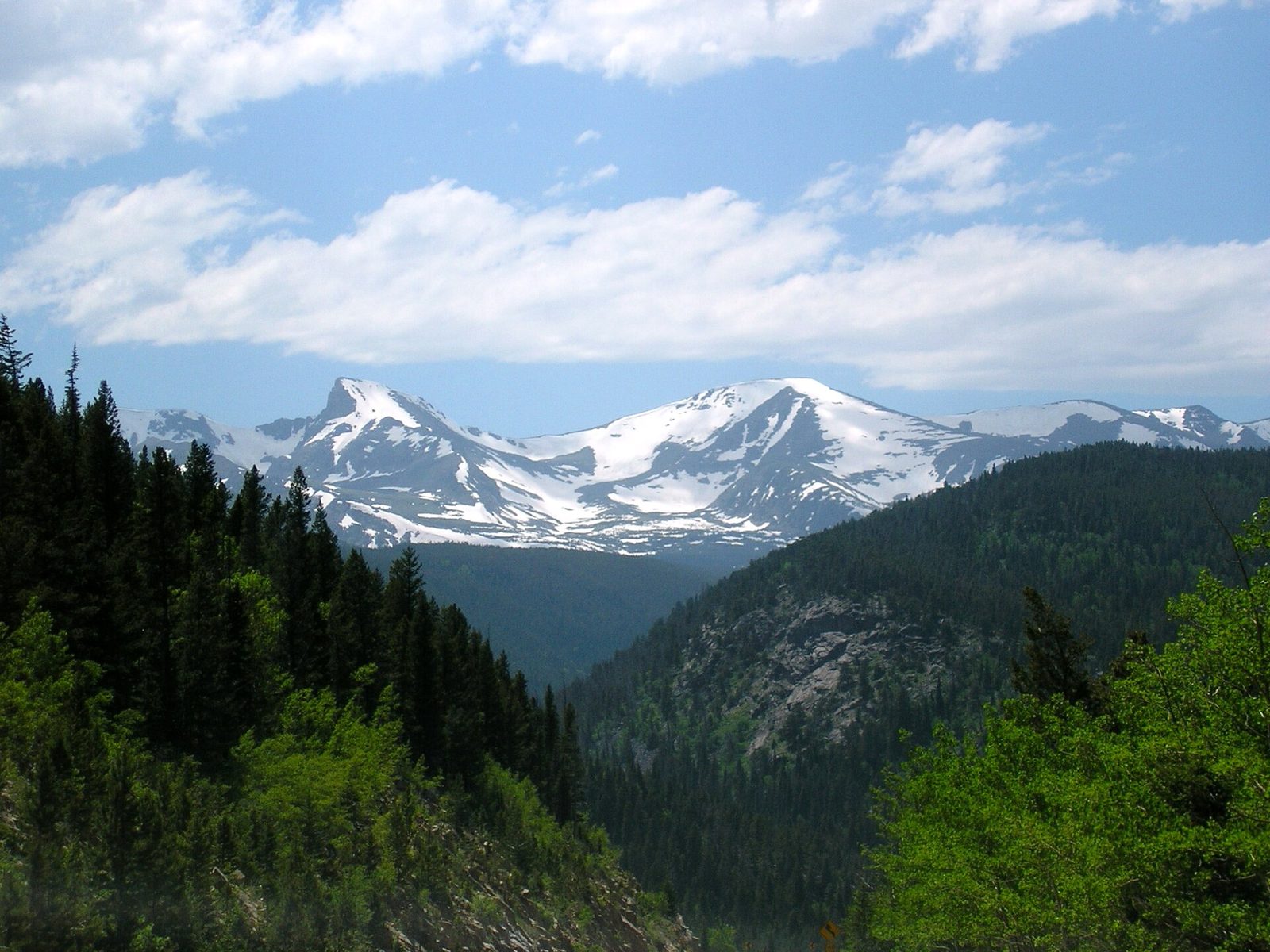
Nederland is where the Peak to Peak stops being a scenic drive and starts being a town. It has a grocery, a school, a ski area up the road and enough visitor traffic to support real letting stock — which also means it has its own rules, and they are not the county's.
What is Nederland vacation rental management?
A company running your furnished Nederland property end to end — listing, pricing, guest contact, cleaning, maintenance, snow and the tax filings — for a share of the rent. At 8,200 feet, the maintenance half of that job carries more weight than the marketing half.
The letting stock here is mountain stock: cabins on wooded lots, A-frames and 1970s owner-builds, a scatter of newer homes toward the reservoir, and condos and apartments near the centre. Managing one is closer to caretaking a remote second home than to turning over a city apartment, and the companies that do it well will say so before you ask.
- Listing and pricing: a short summer peak and a separate ski pattern.
- Guest handling: late arrivals up a canyon in the dark, in weather.
- Turnovers: cleaning, linen, restock, damage checks, wood and kindling.
- Winter duty: plowing, roof and deck snow load, freeze protection.
- Compliance: the town licence and the tax registrations that go with it.
Do you need a licence for a short-term rental in Nederland?
Yes. Nederland runs its own short-term rental licensing programme, established by Ordinance 798 in October 2019 and administered by the Town Clerk — it is separate from Boulder County's, and the county explicitly does not license inside incorporated towns.
The published structure has two routes: a primary-residence licence for people who actually live in the property, and a second class for owners who do not qualify as primary residents. Licences run for a one-year term, are not transferable, and applicants complete a self-inspection form as part of the application. Licensees are responsible for the sales tax due on their bookings.
We are not printing fee figures or caps for Nederland here. Both of the town's official short-term rental pages returned an HTTP 404 when we checked them on 16 August 2026, and a number this consequential does not go on a page on the strength of a secondhand summary. Ask the Town Clerk for the current fee, the current cap position and the current form, and get it in writing before you buy on the assumption a licence is available.
- Two licence routes: primary residence, and a class for non-residents.
- Term: one year, not transferable with a sale.
- Application: completed self-inspection form required.
- Tax: sales tax due on short-term rental income.
- Verify: the Town Clerk, before you list or before you buy.
When is the Nederland season?
Two peaks, not one: a summer trail-and-festival season from June to September, and a winter ski pattern driven by Eldora, with a genuinely dead mud season in April and May.
The summer demand is Indian Peaks demand. Guests are here for trailheads, for the drive to Brainard Lake, for the reservoir, and for the string of events that fill a mountain town's calendar. The winter demand is different people entirely: Eldora is close enough to the Front Range that a large share of skiers are day-trippers, so the nights you sell in January are the ones where somebody decided not to drive back down.
- Summer peak: June to September, trailheads and events.
- Colour: two loud weeks in late September, then a cliff.
- Ski pattern: weekends and storm cycles more than whole weeks.
- Mud season: April and May, the deepest trough of the year.
What does a Nederland manager actually have to handle?
Snow, water and access — in that order. Everything else on the job description is the same as anywhere; those three are what make a mountain contract different from a city one.
Take an owner with a two-bedroom cabin on a wooded lot ten minutes off the highway. Before management: they are on the Front Range, the plow contractor is somebody they met once, and nobody has looked at the property between a mid-December checkout and a February booking. After: the manager holds a written winter schedule — heat verified remotely, water plan agreed, a plow order that triggers on snowfall rather than on a phone call, and a physical walkthrough every week or two. The owner never finds out what a frozen line behind a crawlspace wall costs (~illustrative routine, not a quoted price).
- Plowing: who, on what trigger, and how far up the drive.
- Water: well, cistern or town supply — and who watches it.
- Septic: pumping interval, and what happens on a guest overload.
- Access: whether guests need clearance or chains, said plainly in the listing.
- Wildlife: bear-proof storage and rubbish handling that guests will follow.
Myths Nederland owners bring to management
Myth: a Boulder company covers Nederland.
Reality: it is a canyon drive that changes completely in weather. Ask which town their nearest crew member sleeps in.
Myth: a county licence covers you.
Reality: the county does not license inside incorporated towns. Nederland runs its own programme.
Myth: the ski season carries the year.
Reality: a large share of that traffic drives home the same day. Winter is weekends and storms, not a continuous season.
Mistakes owners make here
- Buying before checking the licence position. A mountain purchase priced on short-term income is a bet on a permit you have not been granted.
- Flat-pricing the summer. One nightly rate through the peak gives away the strongest weeks of a short season.
- Understating the access. Guests who arrive at a snowed-in drive at ten at night write the review you will live with all year.
- Treating mud season as a pricing problem. April and May are a maintenance window; use them for tree work and repairs rather than discounting into an empty market.
- Ignoring bears. Rubbish handling is a guest-behaviour problem, and it is solved with hardware and a clear house rule rather than a polite note.
How does this compare with a resort market?
Lighter competition, thinner services, and a much shorter list of companies. An owner weighing Boulder County against a resort county can see the difference in the size of the field — compare the shortlist for Winter Park or Breckenridge, where a lift-served resort calendar supports far more operators than a town of a couple of thousand ever will.
Can software replace a manager in Nederland?
Only the desk half. BnBGenius handles guest messaging, turnover scheduling, review replies and gap-night upsells as a browser extension with no PMS underneath — first 500 guest messages free, then a flat $10 a month. It cannot dig out a driveway.
Which page should I read next?
For the licence detail and the operating year, see short-term rental management in Boulder County. To compare firms, see Peak to Peak rental management companies, and our full board is the management ranking.
How should you furnish a mountain cabin for letting?
For warmth, water pressure and durability, in that order. The view sells the booking; the heating and the shower earn the review.
Altitude does unhelpful things to sleep, to cooking times and to how quickly a room feels cold once the sun drops behind the Divide. Owners who solve heat, bedding and a genuinely dark bedroom quietly outperform owners who spend the same money on decoration. A wood stove is a feature and a liability at once: it needs a written instruction, dry wood that is actually there, and a carbon monoxide alarm you can point to.
In plain English: guests forgive a cabin for being rustic. They do not forgive it for being cold at two in the morning, and that is the sentence that ends up in the review.
Is a Nederland rental worth managing professionally?
If you live off the mountain, usually yes — and mostly for winter. Owners in town often do better with software and their own trades.